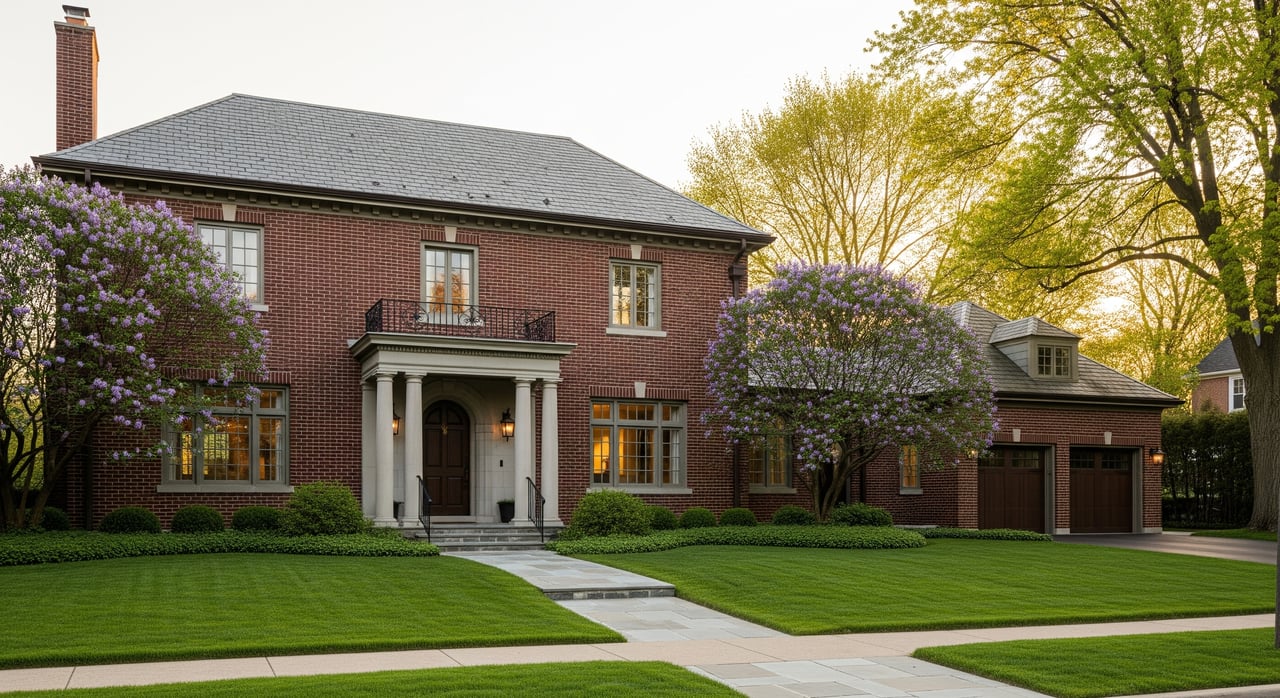
Are changing mortgage rates making your Lombard home search feel like a moving target? You are not alone. When rates shift, the monthly payment changes, which can expand or shrink your price range. In this guide, you will learn how rates influence your buying power, how to build an accurate all‑in budget for Lombard, and what levers you can pull to stay on track. Let’s dive in.
Why rates change buying power
Mortgage rates drive your monthly principal and interest (P&I). For a fixed budget, a higher rate means a higher P&I payment, which lowers the maximum price you can afford. The math is standard across loan types and terms.
At a high level, monthly P&I depends on three inputs: your loan amount, your interest rate, and the term. If you increase the rate or the loan amount, the P&I goes up. If you lengthen the term, the P&I goes down but total interest paid over time goes up.
The core mortgage formula
The standard fixed‑rate mortgage payment formula is:
- Monthly payment M = L × [ r / (1 − (1 + r)^−n ) ]
- L = loan principal
- r = monthly rate = annual rate / 12
- n = total payments = years × 12
You can use this to compare 15‑, 20‑, and 30‑year options.
Quick Lombard‑focused example (hypothetical)
Assume a $450,000 purchase, 20% down, and a 30‑year term. That is a $360,000 loan.
- At 5.00% annual, estimated P&I is about $1,933 per month.
- At 6.00% annual, estimated P&I is about $2,158 per month.
- That is a roughly $225 monthly difference, which is about an 11.6% increase in P&I from 5% to 6%.
These figures are for illustration only. Your actual rate and payment depend on your credit, loan type, and lender.
All‑in monthly cost in Lombard
Your monthly budget is more than P&I. Lombard buyers also plan for:
- Property taxes in DuPage County, paid monthly through escrow.
- Homeowners insurance, which varies by property type and coverage.
- Private mortgage insurance (PMI) if your down payment is under 20% on a conventional loan.
- HOA or condo fees, if applicable.
- Utilities and maintenance, which affect your true cost of ownership.
Property tax bills can vary by neighborhood and taxing bodies. In DuPage County, the total tax rate is influenced by school districts and local levies, so two similarly priced homes can carry different tax bills. Always review the most recent tax bill for the specific property.
Build your Lombard budget step by step
Use this simple process to estimate an all‑in monthly payment.
- Pick a price and down payment
- Price minus down payment equals your loan amount.
- Choose a loan term and rate
- Use the formula above to estimate P&I or plug numbers into a calculator.
- Add property taxes
- Take the annual tax for the property and divide by 12.
- Add homeowners insurance
- Use an annual estimate, then divide by 12. Get quotes for both single‑family and condo options.
- Add PMI if down payment is under 20%
- PMI often ranges between 0.3% and 1.5% of the loan annually, based on credit score and loan‑to‑value. Your lender can quote a precise number.
- Add HOA or condo fees if relevant
- Include monthly association dues plus any known assessments.
- Sum everything
- P&I plus taxes, insurance, PMI, and HOA equals your all‑in monthly housing cost.
Buying power at a set budget (hypothetical)
If your target P&I budget is about $2,000 per month with 20% down on a 30‑year loan:
- At 5% annual, your max loan is roughly $372,000, which supports a price near $465,000.
- At 6% annual, your max loan is roughly $333,000, which supports a price near $416,000.
This example shows how a 1% rate increase can reduce the maximum purchase price by about $49,000 under these assumptions. Your actual numbers will differ once taxes, insurance, and any HOA are included.
Lombard price bands and search
Lombard has a mix of older single‑family homes, newer subdivisions, and condos. A practical way to focus your search is to use recent sold‑price percentiles from the last 12 months:
- Entry level: around the 25th percentile, often condos or smaller homes.
- Lower‑mid: 25th to 50th percentile, modest single‑family homes.
- Upper‑mid: 50th to 75th percentile, larger homes or recent updates.
- Upper: 75th to 95th percentile, newer or higher‑end properties.
Ask for current MLS data on the 25th, 50th, and 75th percentiles to anchor your price bands. Then apply your down payment and rate to see which bands fit your monthly budget.
What to adjust when rates move
You have several levers to keep your payment comfortable when rates rise.
- Shift your search band: Scale your price targets down by the percent change in buying power. A 1% rate increase often reduces buying power by around 10% to 15% depending on term and down payment.
- Increase your down payment: A larger down payment lowers the loan amount and can remove PMI at 20% down on a conventional loan.
- Compare loan terms: A 15‑year term usually has a lower rate but a higher monthly P&I. A 30‑year lowers P&I but increases total interest over time.
- Explore ARMs and buydowns: Adjustable‑rate mortgages can offer a lower initial rate. Temporary or permanent buydowns can reduce your payment if you receive lender or seller credits.
- Expand geography: Consider adjacent DuPage neighborhoods with similar commutes and potentially lower taxes or prices.
- Negotiate concessions: Ask for a seller credit that you can apply to closing costs or a rate buydown, subject to loan limits.
- Lock your rate: Once under contract, discuss rate‑lock options and costs with your lender.
Condo vs single‑family cost tradeoffs
Condo ownership can come with lower insurance costs than a single‑family home, but HOA fees add a fixed monthly cost. Single‑family homes avoid HOA dues in many cases, but insurance and maintenance are typically higher per month. Property taxes depend on assessed value and local levies in both cases. For an apples‑to‑apples comparison, build the same all‑in model for each property type.
When to buy now or wait
- Consider buying now if you need to move for timing reasons and the payment fits comfortably. You can explore buydowns or ARMs to manage near‑term costs.
- Consider waiting if your payment‑to‑income ratio is tight, your credit needs improvement, or you are still building funds to reach 20% down and avoid PMI.
- Remember that both prices and rates can change. Model a few what‑ifs so you understand your cushion.
Local factors that matter in Lombard
- Transit and commute: Proximity to Metra’s UP West line and major highways can increase demand near stations and junctions, which may influence pricing.
- Property taxes: Differences among school districts and taxing bodies can change monthly costs. Review the specific tax bill for each property.
- Inventory: Seasonality and low inventory can affect negotiability and speed. That context is useful when you are choosing between list price, rate buydowns, or seller credits.
Get a custom Lombard plan
If you want a clear number for your monthly budget and price range in Lombard, we can help you build it. We will pull current MLS price bands, gather tax and insurance estimates for properties you like, and model your scenarios at multiple rates and down payments. You will see exactly how each lever changes your payment so you can shop with confidence.
Ready to run the numbers and tour homes that fit? Connect with Envision Homes Now Jamie Fudym REALTOR® for a friendly, data‑driven consultation.
FAQs
How do mortgage rates affect Lombard buying power?
- For a fixed monthly budget, higher rates increase P&I, which lowers the maximum loan amount and home price you can afford.
How can I estimate DuPage County property taxes for a Lombard home?
- Review the most recent tax bill for the property and consult DuPage County Treasurer and Assessor resources to understand levies and assessed values.
What is PMI and when would I pay it in Lombard?
- PMI is insurance on conventional loans with less than 20% down, priced by credit score and loan‑to‑value, and it adds a monthly cost until you reach required equity.
Are ARMs or rate buydowns smart in today’s market?
- They can lower initial payments but come with tradeoffs, so compare total costs, time in the home, and adjustment risk with your lender.
How do HOA fees change a condo budget in Lombard?
- HOA dues add a fixed monthly line item that can offset lower condo insurance, so include HOA plus insurance plus taxes when comparing to a single‑family home.
Should I wait for rates to fall before buying in Lombard?
- It depends on your timeline, qualification cushion, and budget; model a few rate scenarios and consider strategies like buydowns or adjusting price bands.
