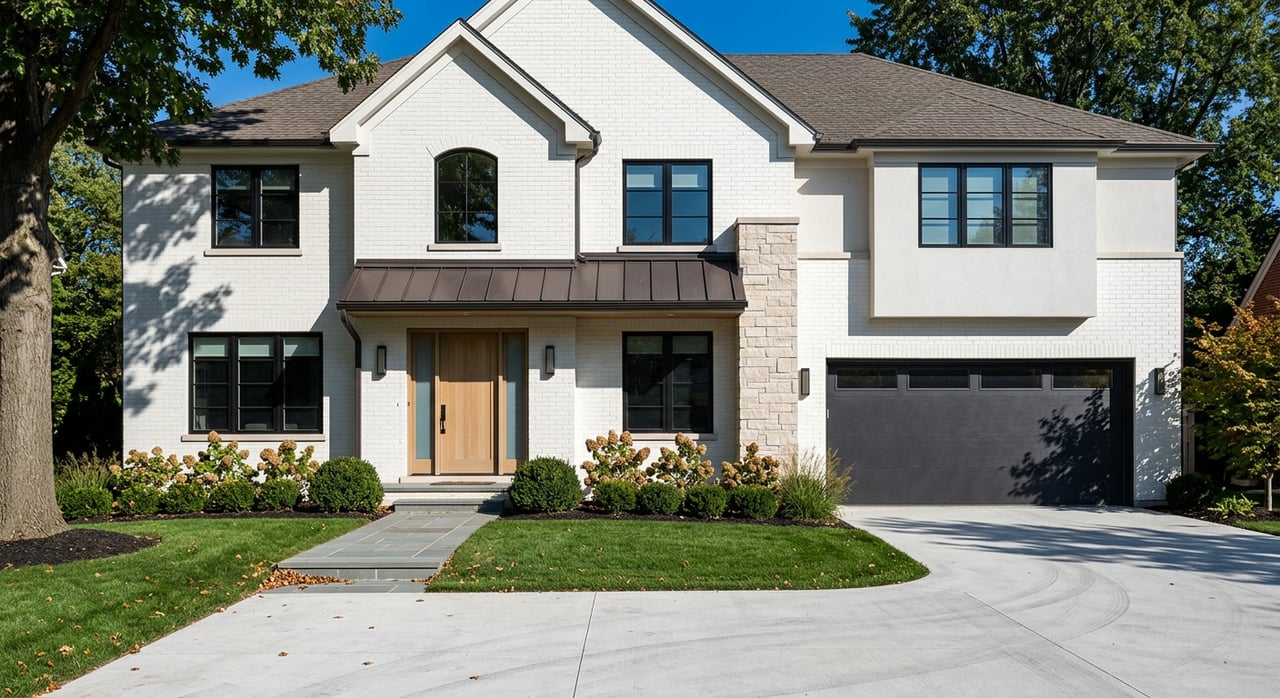
Choosing between a brand-new build and a home in an established Naperville neighborhood can feel like picking between convenience and character. You want the right layout, a reasonable commute, smart long-term costs, and a neighborhood that fits your life. This guide breaks down real Naperville tradeoffs, from prices and timelines to taxes, HOAs, and lifestyle. You’ll also see local examples and checklists to help you compare options with confidence. Let’s dive in.
Naperville market snapshot (2026)
As of Jan–Feb 2026, Naperville’s typical home prices sit in the mid‑$500Ks to low‑$600Ks, with recent sources reporting medians around the high $500Ks to about $606K. Median price per square foot often ranges near $250 to $260. Nationally, the new‑home price premium narrowed to roughly 7.8% in late 2025 as builders offered more inventory and incentives. Locally, premiums still vary by lot, school boundary, and proximity to Metra or major job centers.
The takeaway: compare “all‑in” costs for each home you tour, not just the list price. That means considering upgrades, lot premiums, landscaping, taxes, HOA dues, and likely commute costs.
What you get with new construction
Customization and upgrades
New construction lets you choose a floor plan and many finishes. Builders showcase personalization options, but remember that the base price usually reflects standard selections. Upgrades and structural changes add up, so ask for a written list of what is included and what costs extra. For a local townhome example with a clear feature set, explore Pulte’s Naperville Polo Club community on NewHomeSource.
Warranties and energy efficiency
Most reputable builders offer a version of “1‑2‑10” coverage: one year for workmanship and materials, two years for major systems, and 10 years for structural items. Always get the policy in writing and understand how to submit claims. You can learn more about common coverage structures from 2‑10’s warranty overview.
Newer homes also tend to include higher‑efficiency envelopes, HVAC, and appliances. ENERGY STAR reports that certified new homes can be about 10% to 20% more efficient than typical code‑built homes, and much more efficient than older resale properties. Lower utility bills and fewer near‑term mechanical replacements help offset a portion of the initial price. See the ENERGY STAR impacts for context.
Lot size and landscaping
Many Naperville new builds in subdivisions sit on compact suburban lots, while infill townhomes closer to downtown can have very small parcel footprints. You often trade a larger yard for a modern layout and new systems. If you value shade and privacy, remember that new plantings need years to mature. Industry guidance suggests mature trees can add measurable value, and they improve comfort and curb appeal. For a quick perspective on why evergreens and canopy matter, see this Arbor Day Foundation explainer.
Plan to budget for post‑close landscaping. Initial packages may be a few thousand dollars, while fuller yard build‑outs with sod, patio, irrigation, and screening commonly range from about $3,000 to $25,000 or more depending on scope. Review typical project costs on HomeAdvisor’s landscaping guide.
Timeline and predictability
If you can wait 6 to 12 months or more, a build‑to‑order home can work well. If you need to move sooner, look for quick‑move‑in new homes or focus on resale. Either way, ask the builder for a written schedule, realistic move‑in date, and details on how construction milestones and delays are handled.
What you get in established neighborhoods
Mature lots and instant curb appeal
Established Naperville neighborhoods such as Maplebrook commonly offer lots around 0.20 to 0.30 acres, with many examples near 0.23 to 0.25 acres. You gain mature trees, finished landscaping, and immediate privacy. That outdoor living feel can be hard to replicate in a brand‑new yard without significant time and investment.
Central access and a simpler commute
Many older neighborhoods sit closer to the core of town, which can shorten your drive to the Metra stations and downtown amenities. Naperville has direct Metra BNSF service to Chicago Union Station, with express trains often running about 35 to 55 minutes one way. For context on commute patterns and options, see the Naperville to Chicago commute guide.
Systems, updates, and maintenance
Resale homes may include updated kitchens and baths, or you may inherit older systems. Ask about the age of the roof, HVAC, water heater, and major components. Review any permits for additions or significant work. You can verify recorded documents using Illinois property records for Naperville.
Location and lifestyle tradeoffs in Naperville
Commute and train access
If a short walk to Metra or downtown is important, focus on neighborhoods near the Riverwalk and the downtown or Route 59 stations. If you prioritize newer homes and community amenities, you may look farther south and west, where you will likely drive to the train. The Naperville commute guide outlines typical door‑to‑door considerations.
Schools and boundaries
Naperville is primarily served by two public school districts: Naperville Community Unit School District 203 and Indian Prairie School District 204. Boundaries vary by address, so confirm assignments before you write an offer. Start with the District 203 site and verify for the exact property.
Downtown amenities vs. subdivision perks
Downtown Naperville offers the Riverwalk, Centennial Beach, restaurants, and cultural venues in a compact, walkable setting. In contrast, newer subdivisions often feature larger homes, open‑concept plans, and sometimes pools or clubhouses. If you want a feel for downtown green space, browse the Riverwalk map.
Taxes and HOA costs
Naperville spans DuPage and Will counties, and tax rates vary by township and taxing bodies. DuPage County tables show many Naperville‑area tax rates in the mid‑5% to mid‑6% range per $100 of equalized assessed value, depending on the exact tax code. Review the current DuPage County tax rate booklet and confirm for the property you’re considering.
HOAs are common in newer subdivisions and townhome communities. Dues often cover common‑area maintenance, landscaping, pools, and sometimes snow removal. Many older neighborhoods do not have master association dues, though some swim/tennis communities do. Always request the HOA budget, reserve balance, and covenants to understand rules and costs.
Local examples to compare
- New construction townhome: Pulte’s Naperville Polo Club townhomes emphasize newer systems, low‑maintenance living, and modern finishes. Outdoor space is more limited, which suits buyers who prefer less yard work. Explore features on NewHomeSource.
- Established neighborhood: Maplebrook illustrates the “instant yard” benefit, with many lots near 0.23 to 0.25 acres and mature trees. Some listings note no master association fee, and the area’s swim/tennis options add community feel.
- Downtown infill: Newer rowhomes and townhomes near the Riverwalk trade very small lots for walkability to dining, parks, and the Metra station. This can be a great fit if evenings and weekends center on being in town.
Quick decision checklist
Use this to align your priorities before touring.
Timeline
- Need to move in under 3 months: focus on resale or quick‑move‑in new homes.
- Can wait 6 to 12+ months: build‑to‑order becomes realistic.
Budget
- Fixed budget and value on land, trees, or downtown access: resale often stretches your dollar on location and lot.
- Flexible budget for first‑owner benefit and warranty: new construction can work well. Compare base price plus upgrades, lot premium, landscaping, HOA dues, and taxes.
Lifestyle
- Walkability to Riverwalk, restaurants, and Metra: look near downtown and older central neighborhoods.
- Larger homes, open plans, community amenities: explore newer subdivisions in south and west Naperville and nearby corridors.
Touring checklist
Going in with a plan will save time and surprises.
If you’re touring new construction
- Ask for a written list of standard features vs. upgrades and the price for each.
- Request a firm schedule, target close date, and what happens if delays occur.
- Get the full warranty document and claim process. See a typical structure in this overview.
- Review recent quick‑move‑in comps and any builder incentives.
- Confirm the lot’s drainage plan, easements, and grading.
If you’re touring established homes
- Ask for the age of the roof, HVAC, water heater, and major systems.
- Request permits and documentation for additions or major work.
- Walk the yard for tree health and privacy; estimate removal or planting costs.
- Review typical utility bills and insulation levels.
- Verify the survey and lot lines, and check recorded documents using Naperville property records.
Putting it all together
If you want modern systems, energy savings, and the ability to personalize, new construction can be a strong fit. If you value a larger yard, mature trees, and closer access to downtown and Metra, an established neighborhood may serve you better. Many buyers find the right answer by comparing an upgraded quick‑move‑in new home against a well‑maintained resale on a similar budget.
If you are weighing choices in Naperville, we can help you compare real listings, run all‑in cost scenarios, and time your move. Reach out to schedule tours or a planning session with Envision Homes Now Jamie Fudym REALTOR®.
FAQs
What are typical Naperville commute times to Chicago?
- Naperville’s Metra BNSF line to Union Station offers express trains often around 35 to 55 minutes one way. Door‑to‑door time depends on your proximity to the station and last‑mile needs. See the city’s commute guide.
How do property taxes vary across Naperville?
- Rates vary by county, township, and taxing bodies. DuPage County examples show mid‑5% to mid‑6% per $100 of EAV. Verify the exact code for any property using the DuPage tax rate booklet and the county portal.
Are HOAs common in Naperville new communities?
- Yes. Many newer subdivisions and townhome communities have HOAs that cover common‑area care, amenities, and sometimes snow removal. Always review dues, reserves, and rules before you buy.
What energy features should I look for in a new home?
- Ask about insulation levels, window ratings, HVAC efficiency, and smart thermostats. ENERGY STAR certified homes can be about 10% to 20% more efficient than code‑built homes. See ENERGY STAR’s impacts.
How much should I budget to landscape a new build?
- Expect a few thousand dollars for basics, and $3,000 to $25,000+ for a full yard with patio, irrigation, beds, and screening. Review ranges on HomeAdvisor.
How do I confirm school boundaries for a property?
- School assignments vary by address. Start with the district’s resources and confirm directly. You can begin with Naperville CUSD 203 and verify for the specific home you are considering.
